
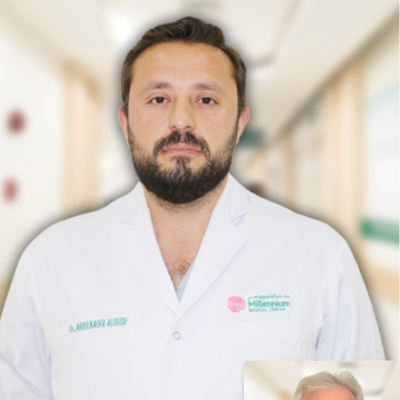
Dr. Abdulkader Nssair Alouch

TIB INDEX DOCTOR PROFILE

Dr. Abdulkader Nssair Alouch

Diagnostic Radiology

1Medical specialty
1Practice branch
OVERVIEW

About the doctor

A physician practicing Diagnostic Radiology at Millenium Medical Center in Doha, Qatar, according to the licensing register and CV information.

PROFESSIONAL BACKGROUND

Qualifications & experience

Education

  • Specialization Certificate, Diagnostic Radiology — University of Damascus — Syria — Specialization certificate in Diagnostic Radiology.
  • MBChB — SAINT-PETERSBURG STATE MEDICAL ACADEMY NAMED AFTER I.I. MECHNIKOV — Russia — Bachelor of Medicine and Bachelor of Surgery.
EXPERTISE

Medical specialties

PRACTICE

Centers & branches

Find centers, branches and weekly hours here.

Milennium Medical Center ↗

Diagnostic Radiology · Full-time

Primary center

Milennium Medical Center - Main Branch

Building 56, Makkah Al Mukarramah Street, Al Luqta, Doha, Qatar.

Primary branchAppointments availableAccepting new patients

ACCURACY AND SOURCES

Verification and information sources

Published information verified before publication

The information displayed on Dr. Abdulkader Nssair Alouch’s TIB Index profile was verified before publication. The administrative team reviews information and documents through the established workflows; new updates are reviewed before approval.

Professional license

License information verified

License number
P6289
Licensing authority
Department of Healthcare Professions (DHP), Ministry of Public Health
License type
Physician Practice License
Country
Qatar
License expiry date

Consult the official authority

Use Qatar’s Ministry of Public Health Department of Healthcare Professions practitioner search to look up the license number and registered scope of practice.

Search the official practitioner register — DHP

License number to search: P6289

Verification does not guarantee treatment outcomes. Government sources cover their registered information and do not imply ministry endorsement of the platform. Information can change after review; help keep it accurate by reporting errors.

FAQ

Frequently asked questions

Does a CT scan use radiation, and do its benefits outweigh the risks?

Yes. CT uses ionizing X-rays, and the dose varies with the body area and protocol. When ordered for a clear medical reason, the diagnostic benefit generally outweighs the small radiation risk. Alternatives such as MRI or ultrasound may be appropriate in some situations, and unnecessary duplicate examinations should be avoided.

What is the difference between MRI and CT scans?

CT uses X-rays and is fast, making it especially useful for many emergencies, injuries, bones, and lung conditions. MRI uses a magnetic field and radio waves rather than ionizing radiation, and provides excellent detail of the brain, spine, joints, and soft tissues. The best test depends on the clinical question and the patient’s circumstances.

Is ultrasound safe during pregnancy?

Ultrasound uses sound waves rather than ionizing X-rays, so it is an important imaging tool during pregnancy when performed for an appropriate medical reason. This does not mean it should be used unnecessarily or repeatedly only for reassurance. The healthcare team selects the examination and timing based on the clinical situation and information needed.

What should I tell the imaging team before an MRI?

Tell the imaging team about any implanted device or metal, such as a pacemaker, vascular clip, or cochlear implant. Also mention possible pregnancy, kidney disease, or claustrophobia. Metal objects and devices that are not MRI-compatible must be removed or assessed. Safety depends on the specific implant and its MRI conditions, not simply on its presence.

Are contrast materials used in imaging safe for everyone?

Contrast materials can improve visualization of certain organs and blood vessels and are safe for most people, but allergic-like reactions and uncommon complications can occur. Before administration, tell the imaging team about previous reactions, kidney disease, medications, and important medical conditions. The team determines whether contrast is needed and which type best balances benefit and risk.

Should X-ray imaging be avoided during pregnancy?

A medically necessary X-ray examination should not automatically be avoided because of pregnancy, but the imaging team should be informed if pregnancy is possible. The clinician balances benefits and risks and may choose ultrasound or MRI when appropriate. Safety depends on the examination, body area, and dose, rather than on pregnancy alone.